



If you’re in your 50s or 60s, you’ve probably noticed that the concept of retirement has stopped feeling like a distant destination and started feeling more like a countdown.
That shift is normal. And it means you’re paying attention.
But it can also bring on a wave of questions:
- Have I saved enough?
- Am I making the right financial moves?
- How do I want to live once I retire?
- What did I miss?
I’ve sat across the table from hundreds of people asking themselves these questions, and here’s what I always tell them: you don’t need a perfect plan, you just need the right moves, made in the right order, starting sooner rather than later.
This is the decade where small, deliberate decisions compound into real peace of mind. So, let’s walk through the nine financial moves I recommend most often, and why each one matters.
Why Is Financial Planning for Retirement so Critical?
Before we get into the specific moves, it’s worth pausing on the “why.”
Pre-retirement financial planning isn’t just about hitting a savings number. It’s about giving yourself options: the option to retire on your timeline instead of your employer’s, the option to help out your kids or grandkids, or the option to travel or downsize or simply breathe easier.
Your goals and your imagination are your guide.
But make no mistake, the years right before retirement are unique. You typically have your highest earning power, but also your shortest runway to fix mistakes. A market downturn at 35 is a blip. A market downturn at 63, right before you start drawing down your portfolio, can reshape your entire future.
That’s why this stretch of your financial life deserves more attention than almost any other.
“The biggest regret I hear from new retirees isn’t that they didn’t save enough, it’s that they didn’t have a plan for how to use what they saved,” says Lauren Williams, CFP®, MBA, CRPC® Co-founder and Advisor at ProsperPlan. “Saving is only half the equation. The other half is knowing how to turn that nest egg into a paycheck that lasts.”
With that in mind, if you’re in your 50s or 60s and wondering what to do before retirement, here are the nine financial moves worth making.
1. Get a Handle on Your Retirement Number
While most people carry around a rough guess of what they’ll need to retire, it’s all-too-often based on a rule of thumb that they’ve heard once.
That’s a starting point, not a plan.
Sit down and actually calculate your number based on your expected expenses, healthcare costs, Social Security timing, and desired lifestyle.
(BTW: This is a great time to use a retirement savings calculator to see where you currently stand versus where you need to be. Numbers on a screen have a way of turning anxiety into action.)
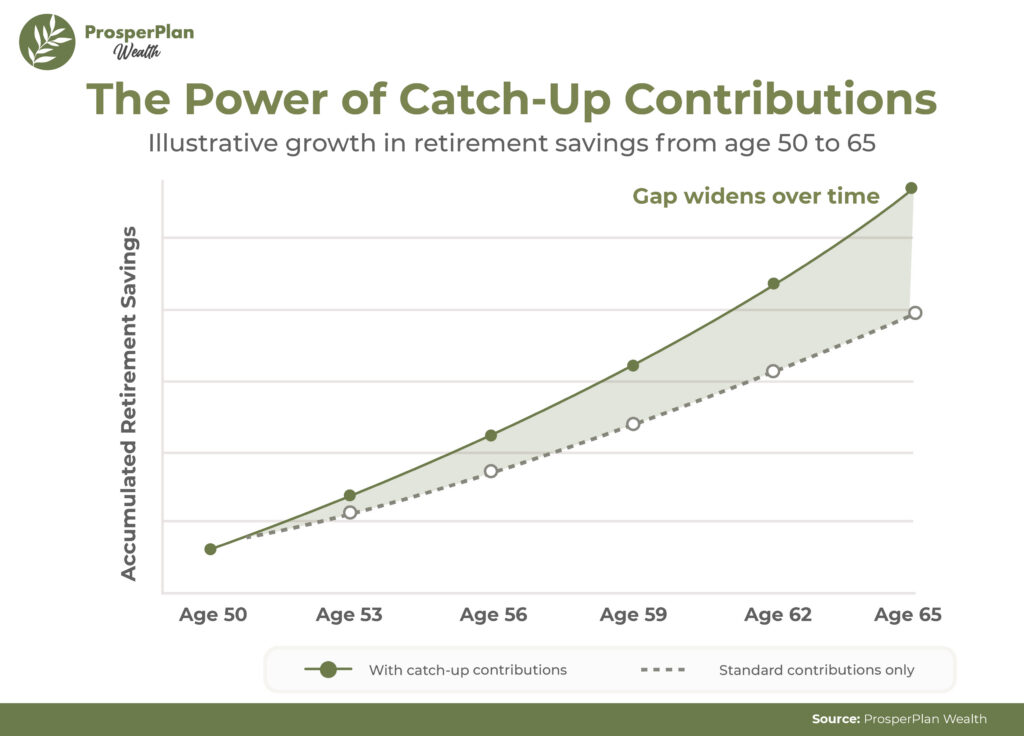
2. Maximize Your Catch-Up Contributions
If you’re 50 or older, the IRS lets you contribute more to your 401(k), 403(b), and IRA than younger savers. The numbers typically go up a little bit every year, so I’m not going to post them here. But these catch-up contributions exist specifically because lawmakers recognize this is prime savings and earnings time. If you’re not maxing them out, this is one of the most direct financial moves you can make to close any gap between where you are and where you want to be.
3. How to Save for Retirement in Your 50s
Your 50s are about acceleration and protection at the same time. This is typically the decade of peak earnings, often with the added benefit of a mortgage that’s getting smaller or already paid off, and children who are becoming increasingly financially independent. Redirect what you used to spend toward tuition or daycare and place it straight into your retirement accounts.
At the same time, although everyone’s situation is unique, this is also when you should typically start dialing back investment risk (not all at once, but gradually). A portfolio built for growth in your 30s needs to evolve into one built for stability and income as retirement draws near.
4. How to Prepare for Retirement in Your 50s
Preparing for retirement in your 50s is about more than money: It’s about clarity. Get specific about what you want retirement to look like for you. Ask yourself: Where will you live? Will you work part-time? What will your health insurance look like before Medicare eligibility at 65?
This is also the decade to prioritize pre-retirement financial planning with a fee-only professional financial advisor. A 100% fiduciary. Working with retirement planning services at this stage lets you course-correct while you still have a decade of earning years ahead of you, rather than discovering gaps once you’ve already left the workforce.
5. Stress-Test Your Portfolio
I love this one because it’s where the rubber hits the road.
Ask yourself: “If the market dropped 25% the year before I retired, would I still be okay?”
If you’re not sure, that uncertainty is worth resolving now. Stress-testing your portfolio against different market scenarios, inflation rates, and longevity assumptions helps you build in guardrails before you actually need them.
“People often think of risk only as ‘how much could I lose,'” Lauren Williams notes. “But in your 50s and 60s, the more important question is ‘how much can I afford to lose without derailing my timeline?’ Those are two very different conversations.”
6. How to Prepare for Retirement in Your 60s
Your 60s bring decisions that are difficult or even impossible to reverse: things such as when to claim Social Security, when to enroll in Medicare, whether to work part-time, and how to structure withdrawals from your accounts. Each of these choices interacts with the specifics of your plan. For instance, claiming Social Security early affects your taxes, which affects your Medicare premiums, which affects your monthly cash flow.
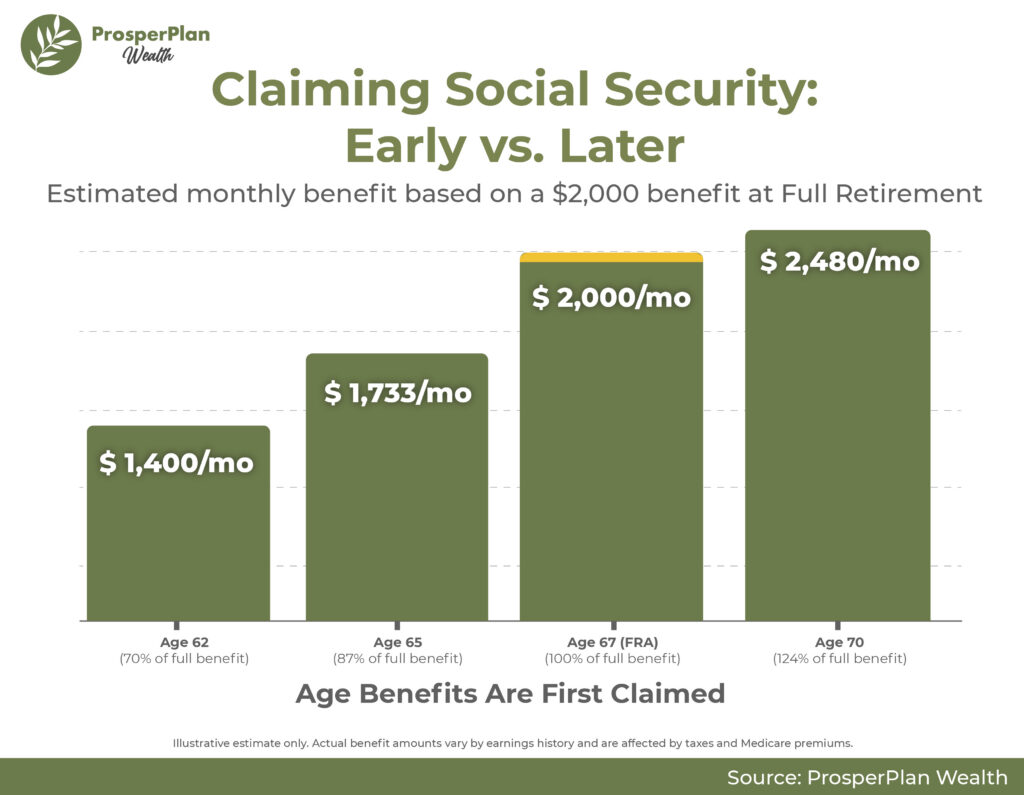
This is where coordinated pre-retirement planning pays for itself. It’s rarely about picking the “best” individual decision, it’s about sequencing decisions so they work together.
7. Build a Tax-Smart Withdrawal Strategy
Many people spend decades saving earnestly, only to lose sight of how they’ll withdraw those savings during retirement. For instance:
- Which accounts do you draw from first? Taxable, tax-deferred, or Roth?
- In what order do you most minimize your lifetime tax bill?
- Should you consider Roth conversions before required minimum distributions kick in?
These decisions are highly personal, and they’re where a lot of unnecessary tax gets paid by people who didn’t plan ahead. This is a core piece of what financial planning services are designed to address, which is building a withdrawal sequence that’s tailored to your accounts, your tax bracket, and your short- and long-term goals.
8. Revisit Your Estate Plan and Beneficiaries
It’s easy to let estate documents gather dust for a decade or more. Before you retire, revisit your will, powers of attorney, healthcare directives, and beneficiary designations. Life evolves via marriages, divorces, births, and deaths. Your documents need to reflect your current wishes, not the ones you had in your 40s.
Please review them as soon as possible.
9. Get Financial Advice for Retirees, Before You Become One
Here’s a mindset shift I encourage everyone to make: don’t wait until you’re retired to seek financial advice for retirees. The best time to get that guidance is in the year or so before you retire, while you still have flexibility to adjust your savings rate, your retirement date, and your investment mix.
“By the time someone officially retires, most of the important decisions have already been made,” says Lauren Williams. “The planning that happens in the final stretch before retirement is where we can still change the outcome.”
Ready to make sure your 50s and 60s decisions work together, and not against each other? Let’s talk about a plan that fits your full financial picture.
📞 (916) 909-3993 | 📧 advice@prosperplan.com
ProsperPlan Wealth ProsperPlanProsperPlan
Frequently Asked Questions
Where is the best place to put money in 2026?
There’s no single “best” place, and anyone who tells you otherwise is someone whose advice you should probably avoid. It depends on your timeline and goals. Money you’ll need within a few years generally belongs in stable, liquid places like high-yield savings accounts or short-term bonds. Money you won’t touch for a decade or more can stay invested for growth. The right mix is personal, which is why a tailored financial plan matters more than chasing whatever’s trending.
What is the average net worth of a 70-year-old couple?
Net worth for households in their 70s varies widely by region, homeownership, and career history, but data from the Federal Reserve’s Survey of Consumer Finances generally shows median net worth for older households in the hundreds of thousands of dollars, with significant variation based on home equity and retirement account balances. Averages can be misleading here, because what matters far more is whether your specific number supports your specific retirement.
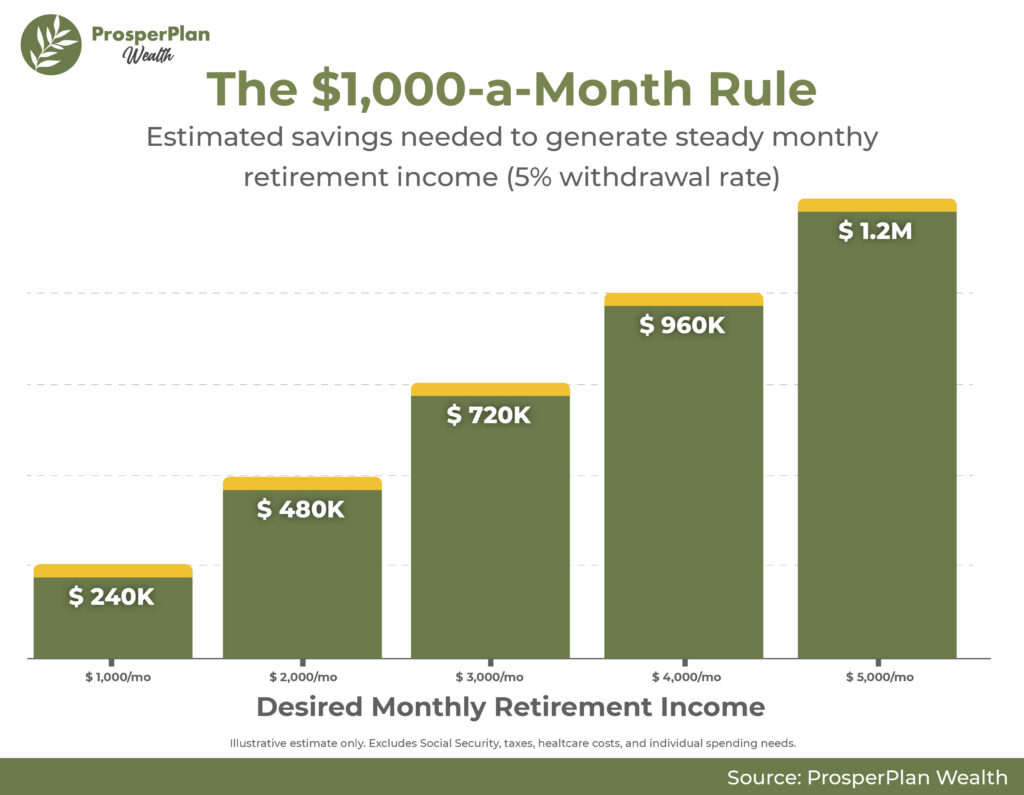
What is the $1,000-a-month rule?
The $1,000-a-month rule is a simple guideline suggesting that for every $1,000 in monthly retirement income you want, you need roughly $240,000 saved (assuming a 5% withdrawal rate). It’s a helpful mental shortcut, but it doesn’t account for Social Security, taxes, healthcare costs, or your actual spending, so treat it as a conversation starter, not a final answer.
What is the 3-6-9 rule in finance?
The 3-6-9 rule generally refers to keeping 3 to 6 months of expenses in an emergency fund, with some variations extending to 9 months for those with less predictable income (like retirees relying on investment withdrawals). It’s a foundational guideline for liquidity, and it becomes especially important right before and during retirement, when you want to avoid selling investments at a loss just to cover short-term cash needs.
Making These Financial Moves With Confidence
Whether you’re just starting to think about pre-retirement planning or you’re finalizing the details before you walk out the door for the last time, the financial moves you make in your 50s and 60s carry more weight than at any other point in your financial life. You don’t have to figure it all out alone, and you don’t have to get it perfect on the first try — you just have to start.
If you’d like a clearer picture of where you stand, our retirement savings calculator is a good first step. And if you’re ready for a more personalized conversation, our team would be glad to help you build a plan that reflects your goals, not just a formula.
Chris Grellas is a CFP® and MSFA, and Co-founder and Advisor at ProsperPlan Wealth.