

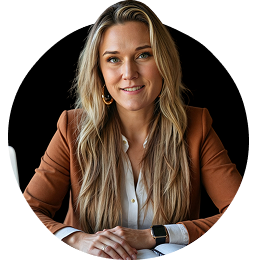

By Lauren M. Williams, CFP®, CRPC®, MBA, Co-founder, ProsperPlan Wealth
A few times each month, a client will sit down across from me and ask some version of this important question: “How do I know if I’m actually ready to retire?” There is no single answer that fits everyone, but there are 10 subtle signs that you are ready to retire that I watch for in every one of those conversations.
Everyone’s situation is unique. And one of the more interesting parts of my work is that even clients with larger portfolios – more than $5 million saved – aren’t always completely confident. Some of the people with the healthiest balance sheets I know still feel unsure, while some clients with far more modest savings walk in with total clarity.
That’s because retirement readiness isn’t just a number. It’s a collection of smaller, subtler shifts – in your habits, your mindset, and your financial life – that quietly add up to: “Yes, I’m ready.”
Here are the signs I look for with my own clients, long before we ever talk about setting a firm retirement date.
Questions to Tell If You’re Ready to Retire
1. You Know the Money Needed to Retire – You Aren’t Guessing
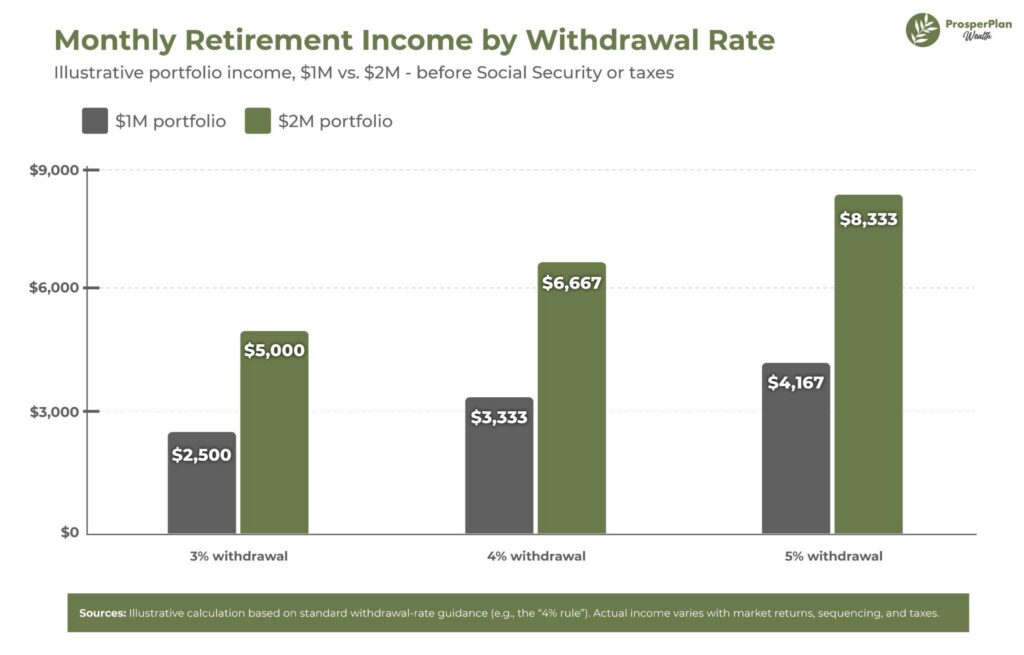
There’s a huge difference between “I think I’ll need about $2 million” and truly understanding how that money needs to work for you, month after month, for the next 30-plus years.
One of the clearest signs you’re ready is that the amount you need to retire has stopped being a vague, anxiety-inducing mystery. You know your monthly expenses. You have a realistic sense of the income your portfolio can generate. You’ve asked yourself honestly: Can I retire with $1 million saved, or do I realistically need $4 million given my lifestyle?
These aren’t rhetorical questions. They have real, calculable answers, and knowing yours is a big part of the battle. If you haven’t run those numbers yet, our retirement savings calculator is a good place to start putting a real figure behind the estimate.
2. A Specific Age Has Stopped Feeling Like the Answer
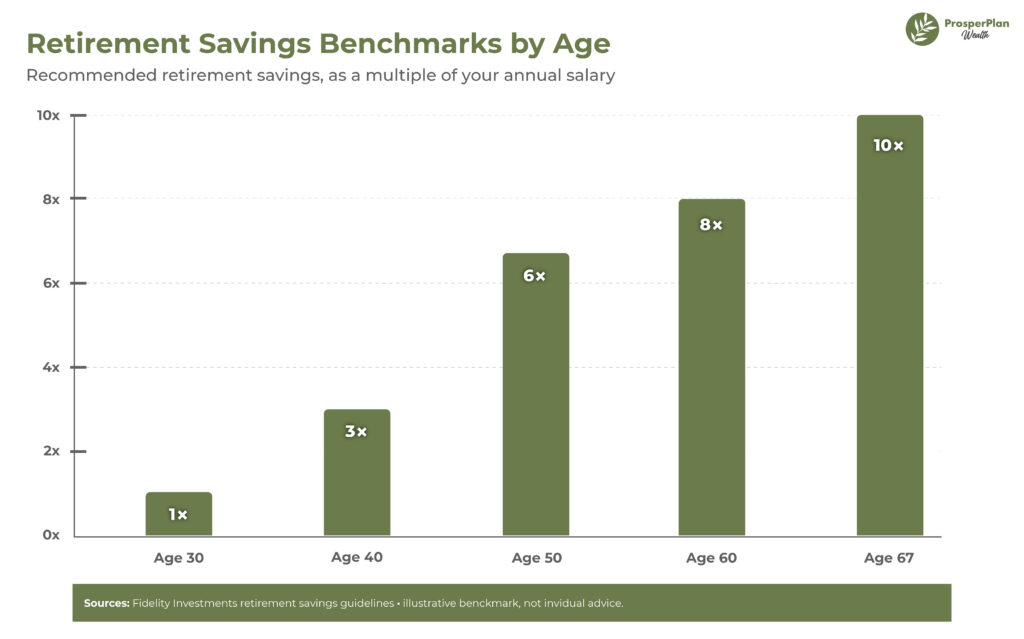
Many people become fixated on a single question: At what age can I retire? It’s a natural place to start – most of us like the clarity of a date circled on a calendar. But by the time you’re truly ready, that question usually softens into something bigger: not just when can I retire? but what will my life actually look like once I do?
Age still matters, of course, especially when it comes to Social Security and Medicare eligibility. But a genuine sign of readiness is when the date on the calendar feels secondary to the plan behind it.
3. Your Income Doesn’t Depend on a Single Source
If your entire retirement income plan is currently “Social Security plus whatever is in my 401(k),” it’s worth pausing before we go further.
Clients who feel most at ease tend to have income coming from three or more places: Social Security, retirement account distributions, a pension, rental income, or part-time consulting.
That layered structure isn’t only about having more money. It’s about resilience. If the market has a difficult year, you’re not entirely at its mercy.
“I tell clients that one income stream is a bet, and three or four is a plan,” says Chris Grellas, CFP®, MSFA, my co-founder at ProsperPlan Wealth. “You don’t need to be wealthy to diversify your income in retirement. You just need to be intentional about where the money is actually coming from.”
4. Debt No Longer Feels Prohibitive
You don’t necessarily need to be entirely debt-free to retire well, but you should have a clear, comfortable answer for what debt is coming with you. Ideally, that’s little to nothing beyond a low-interest mortgage you’re planning to pay off during the early retirement years.
If thinking about your mortgage, a car loan, or credit card balances still makes your stomach drop a little, that’s a sign there may be more preparation to do before you make the leap.
5. You’ve Already Stress-Tested Your Budget
Here’s something I’ve noticed: People who are truly ready to retire have usually already imagined what a difficult year might look like. Not just the comfortable, everything-goes-right budget, but the one where the market drops 20%, healthcare costs rise, or a major home repair eats into savings faster than planned.
If you’ve sat down – with us or on your own – and modeled a few different scenarios rather than simply hoping for the best, that’s one of the most reliable signs of readiness you can have.
6. You Understand Your Complete Healthcare Strategy
Of all the retirement worries that keep people up at night, healthcare is one of the biggest – and for good reason. It’s one of the largest and most unpredictable costs in retirement, especially for anyone retiring before age 65 and becoming eligible for Medicare.
A subtle but important sign of readiness is having a clear answer for that coverage gap, whether it’s COBRA, a marketplace plan, or continued work specifically to bridge the gap.
If you retire at or after 65, being truly prepared means understanding the differences among Medicare Parts A, B, and D, Medigap, and Medicare Advantage rather than assuming you’ll sort it out later.
7. You’ve Shifted Your Portfolio from Growth to Income
For decades, the goal of your investments was growth: contribute, reinvest, ride out the dips, and repeat. As retirement draws closer, that mindset often needs to shift toward generating reliable income and managing sequence-of-returns risk – the potential impact of a market downturn just as you begin making withdrawals.
If your portfolio and your mindset are both already easing into a more conservative, distribution-oriented posture, you may be closer than you think.
“The biggest mistake I see isn’t under-saving; it’s staying in full growth mode five years past when the portfolio should have started shifting gears,” Chris told a client recently. “Nobody sends you a memo when it’s time to change strategies. That’s why we build the transition into the plan years in advance.”
8. You’ve Locked in Your Social Security Strategy
I’ve sat with hundreds of long-term clients to help them work through major financial decisions, but few carry as much weight as this one.
Deciding when to claim Social Security is one of the most impactful choices you’ll make in retirement, yet so many people default to “whenever I stop working” without first running the numbers. Delaying benefits beyond full retirement age can increase your monthly benefit until age 70.
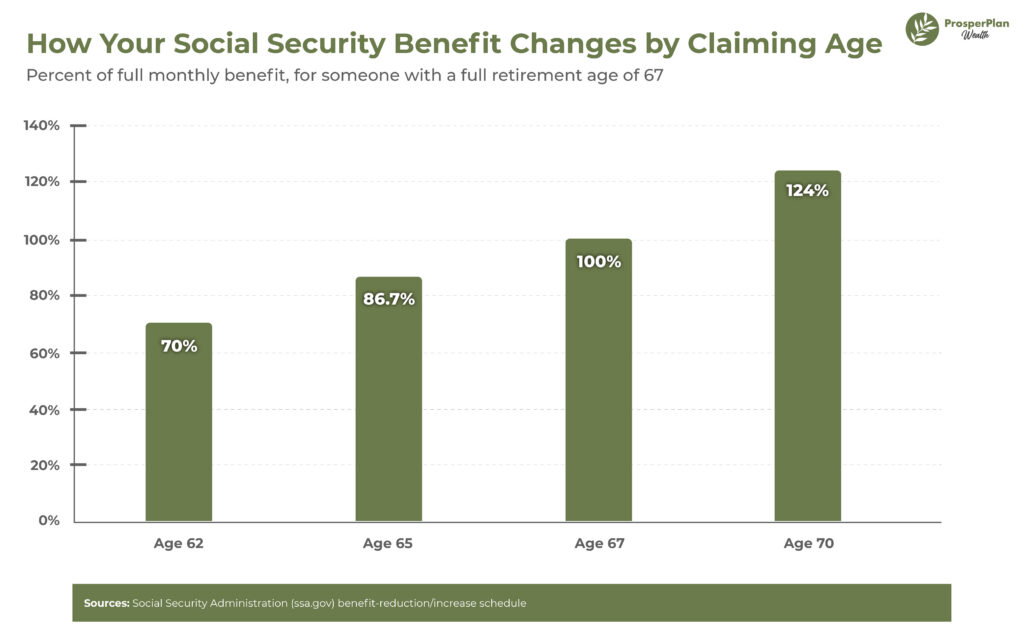
Knowing your own strategy – even if it’s “we’re delaying mine, but we’re claiming my spouse’s earlier” – is a genuine marker of readiness, not merely a detail to figure out later.
9. You Actually Know What’s in Your Accounts – and How Many You Have
After a few decades of working, it’s completely normal to have retirement savings scattered across several places: an old 401(k) from a job you left in 2004, a couple of IRAs, and perhaps a small pension.
A question I hear all the time is: How many retirement accounts should I have? Honestly, there’s no magic number. But there is a wrong answer: “More than I can actually keep track of.”
Readiness looks like knowing exactly what you have, where it is held, how it’s invested, and whether it makes sense to consolidate or keep certain accounts separate for tax or creditor-protection reasons.
10. You’ve Thought About the Emotional and Financial Aspects of Early Retirement
Whether you’re wondering “How can I retire early?” Or considering whether you genuinely want to keep working longer, real readiness means you’ve thought carefully about what you want rather than defaulting to whatever your friends or colleagues are doing.
Retiring early is absolutely possible for many people, but it usually requires more aggressive saving, a clear healthcare bridge plan, and a conservative withdrawal strategy designed to make your money last an extra five or 10 years.
If you’ve actually run those numbers rather than simply hoping everything works out, that clarity itself is a sign you’re closer to ready than you may think.
Why Retirement Readiness Matters More Than the Number Alone
Why is financial planning for retirement still so important, even once you feel like you’ve reached your savings goal? Because your number is really just the beginning of the plan, not the end.
Taxes, healthcare, market timing, income sequencing, and Social Security all interact in ways that can be genuinely difficult to see clearly when you’re looking at your own finances.
That’s exactly the kind of coordinated thinking our retirement planning services are built around – not simply telling you whether your number is big enough, but helping ensure every part of your plan works together rather than against the others.
Your Retirement Questions, Answered
Can I Retire With 1 Million Dollars?
For some households, yes. For others, no. It depends far less on the balance than on what you spend each year, when you claim Social Security, how your income is taxed, and how long the money has to last. A million dollars supporting $40,000 a year of spending is a very different plan from the same million supporting $90,000. Run your own numbers before you anchor to anyone else’s.
Can I Retire With 2 Million Dollars?
Two million gives most households more room, but the same variables decide it. We look at your withdrawal rate, your healthcare bridge if you are retiring before 65, and whether your income is diversified enough to absorb a poor market in your first few years. The figure matters less than the plan built around it.
What Age Should I Retire?
There is no universally correct age. Social Security, Medicare eligibility at 65, and required minimum distributions all create real milestones, but the right answer depends on your spending, your health, your income sources, and what you want your days to actually look like. Most of the clients who retire well chose a plan first and a date second.
Why Is Financial Planning for Retirement Critically Important?
Because reaching your savings target is the beginning of the work, not the end. Taxes, healthcare costs, withdrawal sequencing, and Social Security timing all interact, and a decision that looks smart in isolation can quietly cost you elsewhere. Coordinated financial planning services exist to make those trade-offs visible before you commit to them.
Let’s Find Out Where You Really Stand
If even a few of these subtle signs that you are ready to retire sound familiar, you may be closer to ready than you realize. And if none of them do just yet, that’s genuinely useful information, too, because it tells you where to focus first.
Either way, you don’t have to sort through all of this alone. Our team would be glad to sit down with you, look at your full financial picture, and help you find honest, clear answers about your retirement readiness.
Reach out to ProsperPlan Wealth today. Let’s find out, together, just how ready you really are.
This article is for general educational purposes and does not constitute individualized financial, tax, or legal advice. Please consult a qualified fiduciary financial advisor at ProsperPlan Wealth regarding your personal circumstances.