



8 Reasons the U.S. Hasn’t Slipped Into Recession in 2025
It’s a question we’ve been hearing again and again this year from clients, readers, and even casual conversations over coffee: “With so much noise and uncertainty, why hasn’t a recession hit yet?”
Gail W., one of our readers, put it best when she wrote:
“With all the economic and political uncertainty over the past year, many experts warned that a recession, or something worse, was imminent. Yet here we are, and it hasn’t happened. Why do you think that is?”
It’s a fair and timely question. While the headlines have leaned into fear and volatility, the data tells a far more resilient, and frankly, encouraging story.
We’ve been closely tracking the underlying strength of the U.S. economy, and our view aligns with recent remarks from Fed Chair Jerome Powell following the July 30th, 2025, Federal Open Market Committee meeting: this economy isn’t acting like one on the brink.
Here are the 8 key reasons we believe the U.S. has avoided recession so far in 2025 and why each matters to your long-term financial plan.
1. Resilient GDP Growth
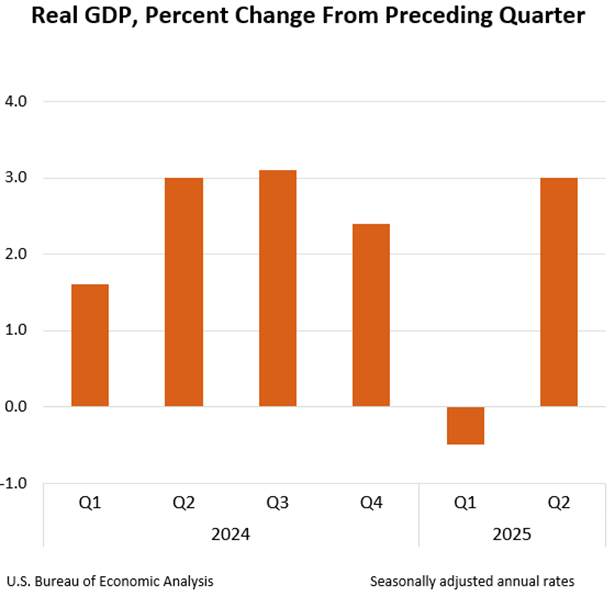
Let’s start with the Gross Domestic Product numbers. On July 31st, The Bureau of Economic Analysis reported that GDP grew at an annual rate of 3% in the second quarter of 2025, which is a bounce back from the small contraction we saw in the first quarter of the year. This rebound is important because it pushes back against recession fears, especially since a recession is typically defined as two consecutive quarters of negative GDP.
That is not something we are seeing right now.
As Chair Powell noted, “The economy is not performing as though restrictive policy were holding it back inappropriately… modestly restrictive policy seems appropriate.”
2. Labor Market Remains a Bulwark Against Recession
One of the clearest signs of the economy’s ongoing strength is the job market.
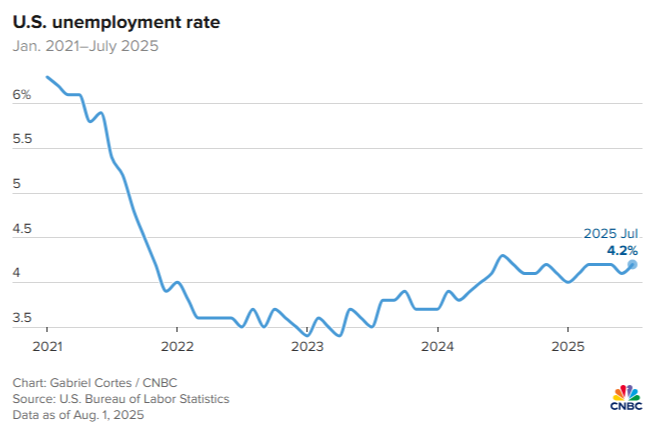
Unemployment is holding steady around 4.3%, which is close to a historically low figure, while average hourly earnings have climbed 3.7% over the past year. That combination of more people working, combined with higher earnings, continues to fuel consumer spending and supports broader economic stability.
Brian Nick, Managing Director and Head of Portfolio Strategy at our partner firm, NewEdge Wealth, points to deeper structural dynamics:
“It’s difficult to have a recession without a rise in unemployment. And it’s harder to get a rise in unemployment when the working-age population is shrinking.”
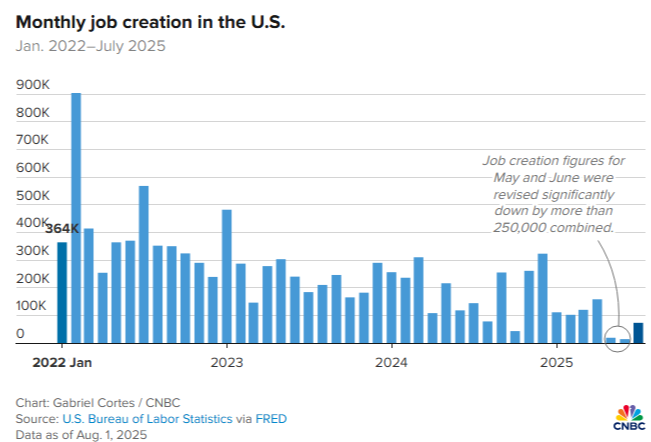
Recent job revisions showing over 250,000 fewer positions in May and June suggest the labor market may be weaker than it appears and could be an early signal of a recession. However, with labor force participation remaining flat and the working-age population shrinking due to retirements, even modest hiring has been enough to keep unemployment low. These two forces, slower job growth and limited labor supply, may be balancing each other, helping the economy remain stable for the time being.
3. Consumer Spending and Confidence are Strong
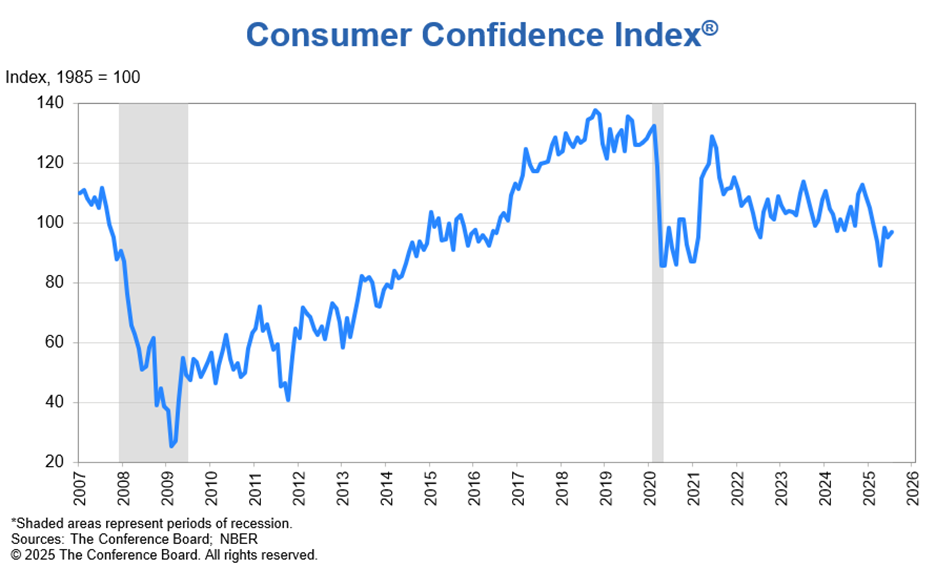
Consumer confidence, a key indicator of economic health, continues to hold strong. Despite concerns of a potential slowdown, Americans haven’t pulled back on spending yet.
In fact, both consumer sentiment and expenditures are on the rise, with economists projecting continued growth through the second half of the year. Rates of inflation, a major contributing factor to both good and bad economies, have eased significantly from its 2022 peak, offering households a bit more breathing room.
Powell addressed this in his press conference, noting that while consumer activity has slowed from the record highs of recent years, it is still solid.
“If you talk to credit card companies, they will tell you the consumer is in solid shape and spending is at a healthy level. Not growing rapidly, but healthy,” he said. “Delinquencies are not a problem.”
Case in point, the inflation rate rose just 2.7% over the last 365 days, which is far below the 9% we saw three years ago. Everyday items like eggs have generally returned to “normal” prices (down from $8 a dozen in early 2025 to around $3.31 now). 2
4. Markets Are Buoyant Again
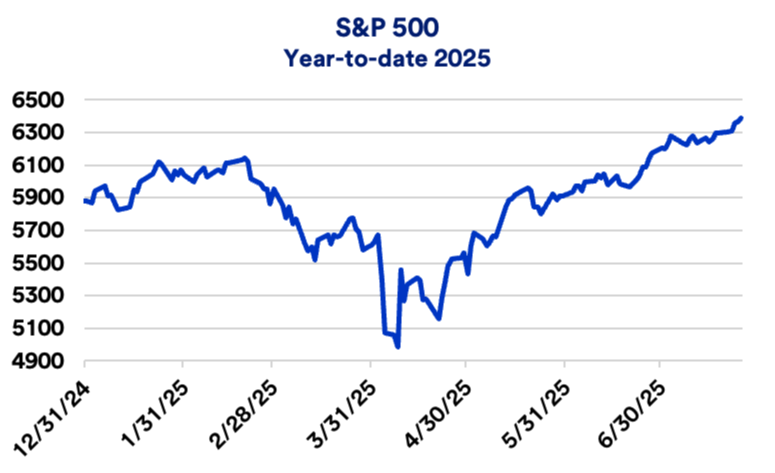
One thing we can all agree on is that it’s difficult to overstate how much the markets have helped ease recession fears. After a rocky spring, strong earnings and renewed investor optimism pushed the major indexes to all-time highs in July. Markets and the economy have a symbiotic relationship, because when markets rise, household wealth increases, which in turn supports spending and investment.
“The S&P 500 has climbed more than 20% since its April low, recovering all lost ground in just 89 trading days and adding $10 trillion in market value: marking the fastest rebound from a 15% decline in history,” said Mike Larson of Seeking Alpha.
But that $10 trillion surge in value is not just a market milestone. It is real money reflected in portfolios of every size. Simply, if you stayed invested in the stock market, your accounts likely captured a part of this historic recovery. Had you reacted to April’s headlines and pulled back or moved to cash, you might have missed one of the most powerful rebounds on record.
Elevated Investor Tip: Resist survival instincts. When fear is dominating the headlines is often when the best buying opportunities appear. Staying calm while others panic can give you a powerful advantage.
5. Tariffs: A Watch Point, not a Wrecking Ball
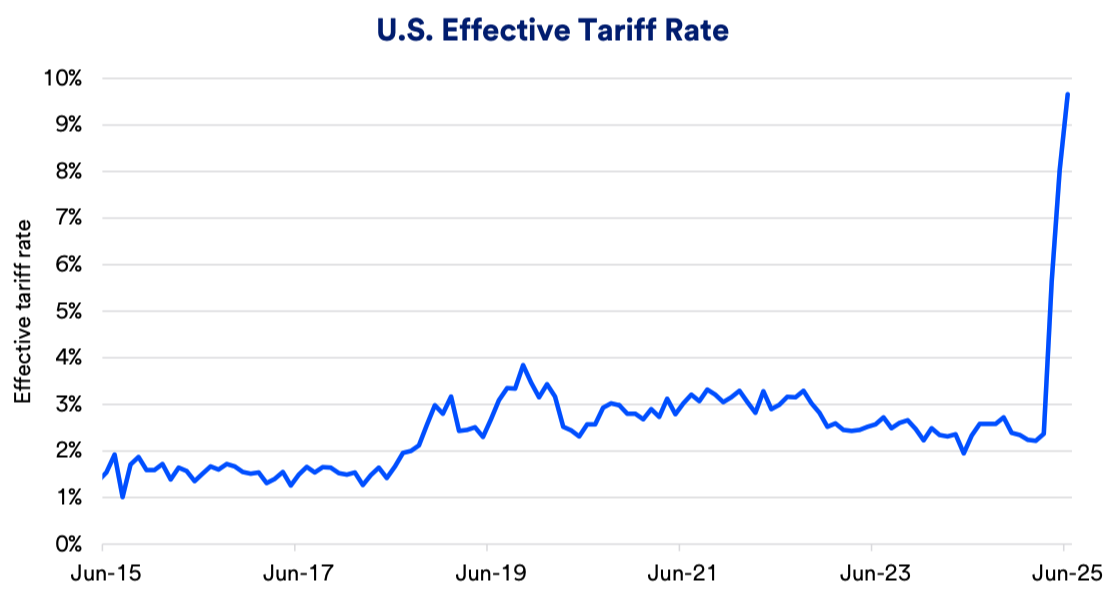
While I think we all understand that tariffs caused turbulence earlier this year, recent trade agreements have brought a measure of certainty. Despite a sharp sell-off in the spring, the swift market recovery suggests that businesses and investors are adjusting quickly to the new landscape.
Tariff negotiations are unpredictable and ongoing, and like every other factor listed here, they merit close observation and sober analysis.
Yes, tariffs may be inflationary in the short term, but they have not derailed the economy so far. Powell called their inflationary impact a “one-time price increase,” and not a continuing trend. Still, they stay a key risk to monitor.
6. The Fed Has Not Overreacted
The Fed has also played a critical role. In July, it held its benchmark interest rate steady at 4.5%, despite obvious pressures to begin cutting rates. This decision reflects what analysts call the “great balancing act,” which involves controlling inflation while avoiding overstimulation of the economy (or triggering panic among consumers and investors).
Translation: The Fed is not panicking and neither should investors.
7. There Have Been No Major Financial Crises
Unlike the systemic collapses of 2008, or the brief COVID shock in 2020, today’s economic backdrop lacks a crisis trigger. Banks are still well-capitalized (meaning they have money, albeit expensive money to loan), and while commercial real estate has shown signs of weakness, it hasn’t triggered broader instability.
This is a big reason the economy has continued to forge ahead.
8. And, Lastly, Most Economic Forecasts Now Predict a Soft Landing
Economists and the Federal Reserve often consider 2% annual GDP growth to be the long-term sustainable benchmark for a healthy, mature economy. However, the Fed’s 2025 projections see a 1.4% GDP growth for the year, which isn’t stellar, but is certainly not recessionary.
And as we all just saw a few days ago, the 3% GDP growth far outperformed even the Fed’s most optimistic projections due to a decrease in imports and an increase in consumer spending.
While certain risks, particularly those tied to tariffs and global trade, remain elevated, there is still no clear sign of a recession that would call for intervention by the Federal Reserve in an effort to stimulate the economy.
So, What Does This Mean for Investors and Clients?
In short, it means staying grounded in your plan. Despite mixed headlines, the economy continues to show resilience, and your personalized financial strategy is built to weather these shifts with clarity and confidence.
And, finally, my ProsperPlan co-founder, Chris Grellas, CFP®, MSFA, and I, would like to extend a heartfelt thank you to Gail W. for sending along this thoughtful question. We love hearing from clients and readers of our newsletter. Education is a foundational component of our mission, and your questions spark conversations that help everyone grow.
At ProsperPlan Wealth, our goals-based planning is designed to adapt as markets shift, the economy changes, and new policies and challenges appear. You can count on us to stay focused, forward-thinking, and committed to managing your investments appropriately in response to broader economic trends.
Have a question for us? Chances are others are wondering the same thing. Send it our way, and we may feature it in an upcoming newsletter!
1 Current Unemployment Rate and Other Jobs Report Findings – NerdWallet
Your Team at ProsperPlan Wealth,
Lauren M. Williams, CFP®, CRPC®, MBA


